
















On Sunday, February 22, Mexico’s most wanted cartel leader, known as “El Mencho,” was killed during a United States-funded Mexican military operation. His death quickly sparked a wave of violence across several regions of the country.
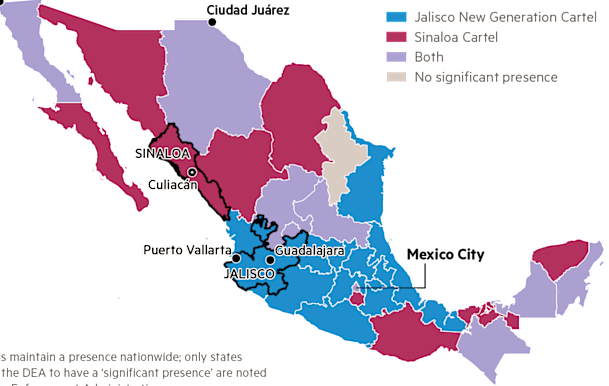
“El Mencho,” whose real name was Nemesio Rubén Oseguera Cervantes, was led Jalisco New Generation Cartel (CJNG), one of the most powerful and dangerous criminal organizations in Mexico. The cartel is known for its involvement in drug trafficking, extortion, and violent conflicts with rival groups and government forces. Over the years, the group expanded its influence across multiple states and built a reputation for responding aggressively to government actions against its leadership.
After news of his death spread, CJNG members retaliated by creating chaos in areas where the cartel has a strong presence, including the states of Jalisco, Guanajuato, and Michoacán. Businesses and vehicles were set on fire, highways were blocked, and public transportation was shut down in several cities. Reports suggested that unrest and cartel-related violence spread across nearly 20 Mexican states as authorities attempted to control the situation.
Tourist destinations were also affected, particularly in Puerto Vallarta and Guadalajara.
According to the BBC, airports and resorts were placed on lockdown after people reported hearing gunshots near Guadalajara. In Puerto Vallarta, more than 300 visitors were stranded at the airport after several flights were canceled, followed by a shelter-in-place order. Schools canceled in-person classes and large public events were also suspended in some areas as officials urged residents to stay indoors.
The unrest has also raised concerns about the upcoming 2026 FIFA World Cup, which will be hosted by the United States, Canada, and Mexico. Some matches are scheduled to take place in Guadalajara, leading to questions about whether it will be safe to host international events in the region if cartel violence continues.
By February 28, officials reported that the situation had stabilized. Military forces removed blockades, shelter-in-place orders were lifted, and daily life in many areas began returning to normal. Although many tourist destinations avoided the worst of the violence, authorities continue to warn residents and travelers to remain cautious and avoid traveling after dark, especially in areas where cartel activity is common.