




















Kristi Noem’s political career began in South Dakota, with her rise starting in November of 2006 when she was elected to the South Dakota House of Representatives. She would win a seat in the U.S. House of Representatives, serving from 2011 to 2019. During her time in Congress, she would align with conservative causes, pushing for limited government, opposition to federal regulation, and a strong push for gun rights. In 2018, Kristi Noem became the governor, making her the first female governor. She gained more traction and attention, especially during the COVID-19 pandemic, for refusing to impose lockdowns and going against federal mandates. This allowed her to become a prominent figure within the Republican Party and one of Trump’s vocal supporters.
During Trump’s political career, Noem was one of the most noticeable defenders among Republican governors, frequently appearing on conservative media showing her support for policies, especially towards immigration and border enforcement. At the start of Trump’s second term as President, he selected Noem to lead the Department of Homeland Security, which encompassed the majority of the federal agencies and bodies in the federal government. responsible for border security, domestic security, immigration enforcement, and disaster response. This position allowed Noem to become one of the notable figures on immigration enforcement. During her time as Secretary, she would be involved in the administration’s push for huge expansions of immigration enforcement, coordinating large deportation operations and increased domestic immigration raids by U.S Immigration and Customs Enforcement agents.
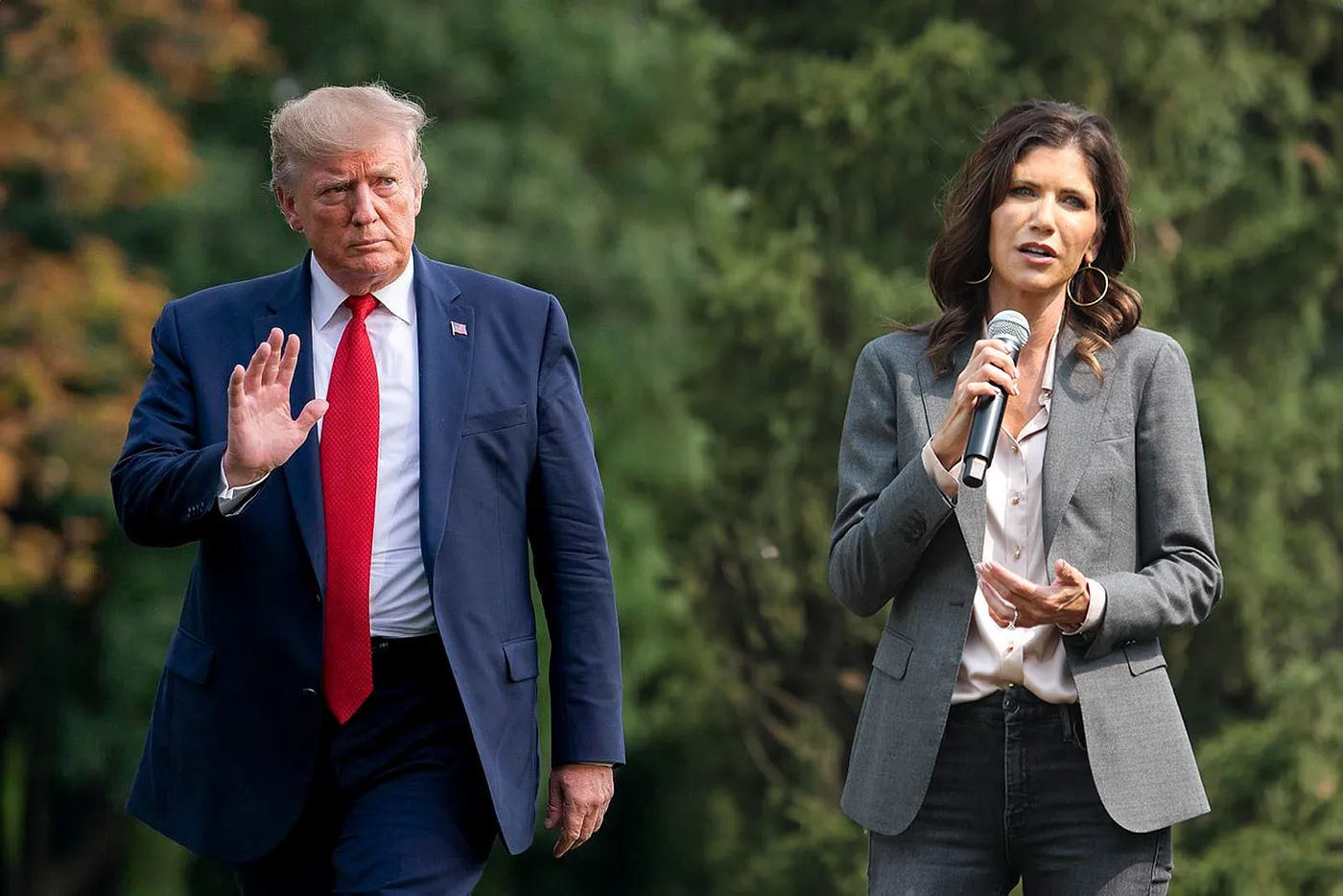
Despite strong support from the president early into her career, Noem’s position became unstable as controversies around the department began to accumulate. Incidents involving federal immigration in Minneapolis, resulting in the shooting and death of two U.S citizens during confrontation, sparking national outrage and investigations by members of Congress. Simultaneously, lawmakers looked into the large advertising campaign launched by the Department of Homeland Security which costed around $220 million, which was designed to discourage migrants from entering the United States illegally and have illegal immigrants voluntarily turn themselves in and depart the country. The criticism behind these advertisement was due to the featuring of Noem herself, raising questions whether the campaign is about public policy messaging or political promotion. Congressional hearings were conducted with lawmakers questioning the process of the contracts behind the campaign and the scale of the spending, Noem stating that the campaigns were approved by President Trump, however were later publicly denied by the president, this disagreement reportedly angered the president and heightened concerns within the administration regarding Noem’s leadership of the department.
Criticism also arose from within the Department of Homeland Security, with some officials complaining that Noem had centralized decision-making within her office, mandating approval from her for large contracts and department expenses which reportedly slowed operations and limited disaster response efforts. Due to mounting pressure from Congress, the public, and even the department itself, the White House decided to replace her. On March 5, 2026, President Trump announced that he was removing Noem from her position as Secretary of the United States Department of Homeland Security and nominated Markwayne Mullin to lead the department in Noem’s place.
Despite Kristi Noem’s removal from her post on the Executive Cabinet, Noem was not entirely outed from the administration. President Trump reassigned Noem to a new diplomatic role focused on security cooperation across the Western Hemisphere, with her being appointed to special envoy for the administration’s “Shield of the Americas” initiative. This initiative is a regional effort aimed at strengthening the cooperation between the United States and partner nations to handle transnational crime, such as drug trafficking and illegal migration.