
















As many students are well aware, the cell phone policy at Granada High School varies between classrooms and is heavily based on their teacher’s preference. Some enforce strict phone rules and even have “phone jails” in their classrooms to prevent them from becoming a distraction. On the other hand, some teachers don’t mind their presence and encourage students to be responsible for their own learning and use them as educational tools.
Pretty soon these high-schoolers will be tossed into the real world, and with the rise of Artificial Intelligence, the possible loss and/or creation of millions of modern day jobs is just around the corner. As a result, most students see the value in adapting to these new technological advancements in order to find success alongside them. Additionally, with the availability of AI courses amongst colleges and universities growing drastically, personal incentive to jump on these opportunities sooner than later have increased in turn. But how can these tools be incorporated without being used inappropriately and hindering students ability to really learn the material?
At GHS, teachers and students alike have their own opinions regarding the controversy.
“I think cell phone use can be beneficial as long as people are using it to help accelerate their learning,” stated calculus teacher, Matt Clifton. In his classroom, he does not ask his students to put their devices away. Although he understands some students will use them for inappropriate purposes, he thinks they can be a helpful tool when used responsibly.
“There are certainly times when we want to use cell phones in class, like for example when they need to look up a formula if they forget it and don’t have a book that’s handy. AI can also be beneficial for our more visual learners who need to see the steps to solve a problem so they can memorize and apply those principles later. But unfortunately, I think most students would take advantage and just copy and paste their answers,” Clifton admitted.
Using AI to cheat has become a serious issue at Granada, especially recently with the Chromebook Plus devices receiving updates with built in AI tools. The new features include deeper Gemini integration, specialized writing tools, and improved media editing.
AP United States history teachers Kelly Siefering and Haley Weaver have both gone lengths to prevent cheating in their own classrooms due to recent incidents involving these updates.
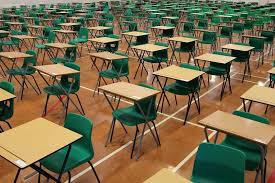
Weaver identified that the tool being abused most recently was a new Chrome addition called Google Lens; an AI-powered visual recognition app that allows students to use their camera to screenshot tabs and automatically receive information about them. The app can translate text, identify sources, find information, and solve homework problems in real time. Think of it as a quick and easily accessible online textbook for just about any subject. However, the main issue regarding Google Lens is that it bypasses GoGuardian; the app teachers use to monitor and record students’ screens from their own laptops during quizzes and exams.
“I know in Siefering’s class she had her students turn their desks around completely so she could see their screens while they were doing LEQ’s on chromebooks the other day. I haven’t done that yet; I’m still using GoGuardian and just walking around the room and monitoring things,” said Weaver.
Weaver claimed she’s had several conversations with her classes this year regarding cheating and plagiarism due to the widespread use of apps like ChatGPT. Although the district has now blocked Google Lens from students’ chromebooks, she still thinks students are always going to find ways around the rules.
“I’ve seen people write on their chromebooks or put notes on their water bottles; there’s just no way to catch it all. I think as teachers, all we can do is our best and just understand that at some point we can only do so much,” she confessed, adding, “There’s always going to be someone. I think the most important thing is to encourage students to use academic honesty and remind them cheating isn’t worth it.”
For herself, Weaver admitted to occasionally using AI to create example student responses for her kids to correct and learn from, but besides that generally chooses to stay away from it.
“I’ve been teaching for 10 years now and all the lesson plans I use are pretty much self created. I wouldn’t use AI as a reliable source or ask it to make slide presentations because I’d want to know where the information is coming from and be able to confirm it’s accurate. In the same way, I feel students should be held responsible for their own information as well.”
Clifton even noted that he himself has attempted to use AI for grading and lesson planning, but it isn’t smart enough yet to handle a lot of the upper level calculus taught in his class. At the end of the day, he spent more time correcting the errors than it would’ve taken to just do the work himself.
But, is it okay for teachers to reap the rewards of this tool while students are forced to do things the old-fashioned way? Why aren’t teachers held to the same standards as their students?
Weaver empathizes with students on this issue.
“I understand the argument that there should be fairness across the board for students and teachers alike, but I think it also really depends upon the context in which we’re using it,” acknowledged Weaver.
“I think it’s so hard for students; there is so much pressure with college and resumes nowadays. We live in a culture where you guys are expected to overcommit and so I understand how tempting it must be to just go grab information online for quick and easy credit.”
However, recent studies and expert analysis suggest that this habit has actually lowered the overall intelligence of our generation. In fact, findings presented to the U.S. Senate have proven that Gen Z is the first generation in modern history to score lower on IQ and cognitive tests compared to their predecessors. This shift breaks a 60-year trend of rising intelligence scores.
Overreliance on AI for writing, researching, and problem-solving has promoted what’s known as cognitive offloading; meaning reduced brain activity, shortened attention spans, and unoriginal, lower-quality work. This severe lack of engagement in complex mental tasks is already causing the critical thinking, memory, and creativity skills of this generation to atrophy.
At the end of the day, Weaver just hopes her students don’t lose sight of the value of their own knowledge and ability to think critically.
“Students should want to develop these skills on their own so they can become contributing members of society,” voiced Weaver.
GHS junior Riya Anand has a lot to say on the matter as well. From her perspective, AI has been a useful tool for her in many aspects of her learning without crossing the line into cheating.
“I use AI in a helpful way for school by uploading my notes and turning them into practice tests or quizzes so I can study. It helps me check what I actually know before a real test and figure out what I still need to work on. I also sometimes use it to explain topics in simpler terms if I’m confused after class. That way I’m not just rereading my notes, I’m actually practicing and understanding the material more,” said Anand.
In her opinion, these tools can help students learn even more when they are used to support studying rather than solely to give quick and easy answers. For example, AI has the ability to make practice questions, explain steps, or give examples that make concepts clearer for students who don’t understand the material or maybe just learn slower than others and don’t feel comfortable to ask questions in class. This way, AI can help students build upon their own knowledge rather than replace their critical thinking.
Riya Anand also touched base on some teachers’ contradictory policies.
“I think it can feel a little hypocritical when teachers use AI to help with things like lesson planning or grading, but students aren’t allowed to use it at all. At the same time, I understand that teachers might see it as a time-saving tool because they have a lot of responsibilities.”
But, so do students.
Many students choose to use these tools to cheat because of their efficiency, even when they know it’s wrong. When students become overwhelmed, stuck, or just lack time to complete their work due to extracurriculars or other responsibilities, it can become extremely tempting to turn to desperate measures just to get everything turned in on time. There aren’t any excuses for blatant plagiarism, but this is without a doubt a fairly common and relatable experience for any student with a full plate just looking to relieve the stress of high school expectations.
Anand thinks teachers can help with this by encouraging communication and being understanding of their students’ often busy and difficult schedules. This way, teachers will ultimately elevate their students’ educational experience and most importantly, motivate them to put in the effort to learn.
“I don’t think the problem is really the tool itself, it’s more about how it’s being used,” Anand concluded. Although she sees the benefits of integrating these tools into the education system, she also agrees with her teachers’ points and understands that this is highly dependent upon the students to be responsible for their own learning.
Regardless, AI isn’t going away any time soon. Knowing how to use it responsibly can help students become more efficient and knowledgeable while simultaneously preparing them for a future where these technologies are going to be an essential part of a vast range of careers. Ultimately, it comes down to whether or not students are ready to take on that responsibility, and so far, most educators vote NO.