





















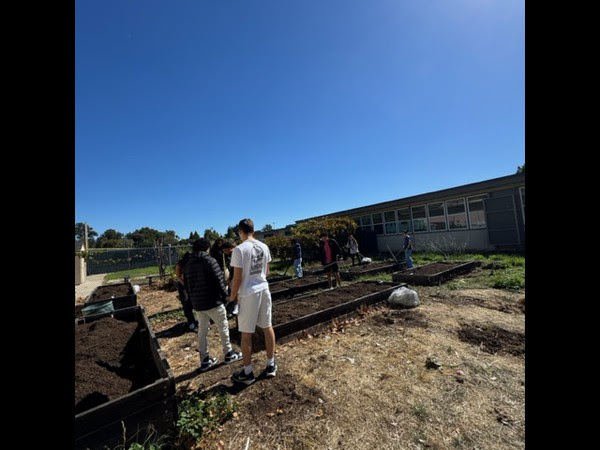
This year, the culinary classes are doing an extra special project that is not only more cost friendly, but also better health-wise.
“I thought it would be really cool to grow our own produce… Also we already had an existing garden and this organization called Fertile Groundworks has been really helpful working with school gardens. They provide all the seedlings and the soil, and really, we couldn’t have afforded all that without them.” said Mrs. Kang, the culinary teacher.
With this year being Kang’s fourth year teaching here at Granada, she claims that starting up the garden has been something she has wanted to do for a while.
“It just took a while to get it started because we just have so much cooking and stuff happening in class that it was hard to find time to do it. But finally, this was the year that I was like ‘let’s do it.’”
For the first few weeks, there was a lot of clean up that needed to be done. The classes would pull weeds and clear out garbage from the garbage beds that are located between the ceramics building and the 400 hall.
The garden will be extremely beneficial regarding the culinary program’s budget as well.
“Obviously it’s more economical [to garden], since we are running on a very tight budget in class,” said Kang.
Mrs. Kang has many plans for what kind of vegetables will be grown in that garden. Due to the school schedule, the classes will not be able to grow summer crops like tomatoes and basil due to the lack of people available to care for it during the summertime.
“We’re growing stuff like lettuce, peas, cabbage, kale, brussel sprouts, arugula. Stuff that is able to be grown and harvested in the winter while we are in school.”
She hopes to teach her students how to not only live a healthier lifestyle, but to also show them the benefits of growing their own produce. She wants her student’s to be able to know where their food comes from and to understand the effort that goes into gardening and making good produce.
“A lot of these students have never stepped foot in a garden and I think it’s just a cool experience, from farm to table sort of thing.”
Although she received mostly negative reactions from her students, she is hoping that her classes will be able to have a new appreciation for the food they have and the effort that goes into preparing it.
For her students that are more picky about their food, she wishes to expand their palette and encourage them to try new foods that they may have never tried before.
“I see a lot of the time, when they have a hand in growing it, they are more open to trying it,” said Kang.
When the garden gets going, she hopes to make more salads with the lettuce and cabbage they will grow, as well as more soups for the teacher lunches they provide.
This garden is a good opportunity to switch things up in the classroom, especially on Fridays when the culinary classes are mostly cleaning. It gives students a chance to get some fresh air while also getting important work done on the garden.
So far, the classes have cleared out all weeds and trash from the garden beds, moved compost to fill the garden beds and spread over future orchard sites, forked and turned garden beds, pulled weeds in the pathway, leveled pathways and filled holes, and harvested existing crops such as grapes and basil.
Although it may have been a slow start, the garden is full of promising opportunities for not only the culinary classes but also the school itself.